I struggle to know what to write on my blog and what would be of interest to people back home (hence my lack of writing in so long!). I’ve decided I’m going to try to write once a month. I’m going to alternate months, writing about some “development” topic that I’m thinking about or working on and alternate that with some funny or personal story that will hopefully be interesting. So this month, I’m in the development mood, having just come off of a week of EWB training/Southern Africa (SA) retreat and have a lot of thoughts floating around in my mind. The training/retreat was really helpful in pulling us out of our placements where we can get bogged down in the daily trials and frustrations of our projects and stepping back to look at the larger picture or context into which our project and/or placement fits. It also was helpful that we were able to hold these meetings in some pretty ideal locations. We set up a makeshift classroom in a shelter on the beach in Senga Bay for our training and then traveled to Zomba Plateau where we met up with the other SA OVS in a beautiful mountain setting for the retreat. So here goes…
Within the water and sanitation sector in Malawi, and I would guess in most other developing countries, the lack of capacity of the government has been identified as one of the challenges in the development of the sector. In Canada, or Ontario at least, the municipal government has the sole responsibility for providing access to safe water and sanitation. Users pay water fees to the municipal government who, for the most part, owns and manages the systems. The provincial government sets guidelines and regulations on everything from treatment and testing requirements to minimum service levels, from design guidelines to training requirements for water/wastewater system operators. These regulations must be strictly followed at the risk of hefty fines. Here in Malawi, however, the government ministry responsible for water and sanitation exists at a national level. In theory, this national ministry sets similar guidelines and regulations and, in accordance with the decentralization policy, the district government provides coordination and planning of the wat/san activities occurring within their boundaries. The NGOs, however, are largely responsible for project implementation, or the installation of the capital works and the operations/maintenance and overall management of the system is the responsibility of the beneficiary community.
There are several capacity shortfalls within the institutional system that are causing systemic challenges and difficulties in the sector. The first and probably the most significant, is the availability of qualified staff. At the national level, the ministry has made great improvements having recently released a National Water Policy and they have a National Sanitation Policy available in draft form. These guiding documents are helpful in consolidating a sector that has previously been divided into many sectors such as Health (sanitation) and Agriculture (irrigation), given the multi-sector aspects of water. Previously each of these ministries had policies on water that were often overlapping or contradictory. That being said, there is, however, no guideline on water quality monitoring or testing or other important guiding information due to the lack of capacity (skills and people) to put the time and effort necessary into the development of these documents. At a district level, the ministry is severely understaffed. In my district for example, there is one manager and about 4 technical/field staff for an area that is probably the size of Ottawa, give or take. Some districts don’t even have a manager! It’s impossible with so few people and resources to be able to adequately coordinate and plan the sector, keeping track of the various actors, developing and enforcing regulations.
This brings me to my next challenge, which is a lack of accurate information. In my limited experience here, I have not seen a lot of baseline information that is required for the successful coordination and planning of the sector. WaterAid has been instrumental in making some improvements to this shortfall by the creation of waterpoint mapping, a map of each district showing the location of each of the waterpoints, the type (public tap versus borehole) and their functionality (whether or not it is working). This is extremely valuable for planning purposes, to know which communities are well served and which are not, to know what systems need rehabilitation, etc. However, this exercise was completed for some districts up to 4 or 5 years ago, and given the resource shortfall, has not been updated since. In addition, there is insufficient hydrogeological or water quality data so it is difficult to track changes that may be occurring overtime.
One of the opportunities I may have while I’m here is to work on the development of district wide water and sanitation plans which will serve as a sector planning document for the district government and to assist in capacity development at a district level. While I see a great need and value for this I have several questions. First, is there a threshold capacity that needs to exist that makes it worthwhile to invest in capacity building? For instance, if I can assist in building the capacity of the small staff that are available, will this improve things in a larger sense within the sector at district level if these people are so overstretched in terms of resources and finances, it’s like working with one hand tied behind their backs? Is it worthwhile to invest in the creation of a plan, if they do not have the capacity to use it, enforce it and update it so it remains a useful document? Given how overstretched the existing staff are, do they have the motivation to continue to strive for improvements in the sector in their area? How can we create a useful plan given the lack of available baseline information and how can we improve this information given the currently strained human resources?
Anyways, all difficult questions and ones I currently do not have the answers to but hope that with time, I may be able to figure out. That’s all for now, hopefully all is well back home!
Monday, November 5, 2007

Monday, September 24, 2007
A bit about work....
I’ve had some questions recently about what exactly I’m doing at work so I thought I’d try to clarify a few things here. In Machinga, I’m working with a partner of WaterAid’s. WaterAid itself does not undertake the implementation of projects, but instead, serves as a funding agency providing technical and other support to local NGO’s responsible for project implementation. The rationale is that by working with local NGO’s, we are building the capacity of these organizations to implement similar projects, assisting them also with identifying other funding opportunities outside of WaterAid, therefore, in the future, these organizations should be able to function independently. The organization I work with here is called Target National Relief and Development (TANARD). In Machinga, TANARD is responsible for the rehabilitation of two gravity fed water schemes, as well as the working towards increased sanitation and hygiene education in the beneficiary communities. In all water projects, there must be an element of sanitation and hygiene as the full health benefits of providing clean water can not be achieved without the associated hygiene education. For example, if clean water is being provided, but collected in unclean buckets or food is being prepared without clean hands, etc., the full benefits of the water will not be realized.
Day to day we are undertaking a number of different activities. We work very closely with community management committees as well as the district government (which is roughly equivalent to the municipal government back home). The purposes of these collaborations are many. The government of Malawi has a very strong decentralization policy, on the basis that local government and communities are the most knowledgeable about the resources and needs in their areas. Within these two schemes as well as most water systems, the communities are responsible for the operation and maintenance of the system. Committees are set up on a number of levels. Tap Committees are set up for each tap (of which there are hundreds). These committees are responsible for collecting user fees from the beneficiaries and reporting any required maintenance. The schemes are divided into several sections that each has a committee. These Section committees are responsible for the overall coordination of the system in their section. In addition, each section has a Repair Team, made up of individuals trained in the maintenance and the system, who are dispatched when problems are reported. There is also an overall Main Committee who looks at the system as a whole, investigates opportunities for expansion and works to develop solutions to challenges within the system such as vandalism and low community participation.
The district government is responsible for the overall development of the district, including water and sanitation. Given the current capacity of the government, however, they are responsible for so many other areas, that they rely on local NGO’s to assist in the implementation of various projects. Their involvement, however, is paramount as ultimately, the development that occurs within their area is their responsibility. This has been a problem with other NGOs in the past that do not work through the government, therefore, government is unaware of their activities which often leads to duplication or the implementation of projects that are unnecessary or not coordinated well with other development in the area. For instance, we are working to rehabilitate two of the gravity fed systems but if another NGO begins to drill boreholes in the same area, this will have a significant impact on our project success.
On a daily basis we are undertaking a variety of activities. We are currently supervising the construction of 60 tap aprons. These concrete platforms serve to protect the area around the tap from contamination and divert waste water away from the area. In this activity we are working with local contractors, therefore, we are also trying to forge relationships and develop the capacity of the private sector in water service provision. We are also working with local masons in the construction of concrete latrine slabs. Many communities, if they have latrines, have latrine floors constructed of hardened dirt. Due to the soil conditions, however, these are prone to collapse. Concrete slabs are more durable and can be reused on a new latrine if the existing one becomes full. We are also promoting the construction of ecological sanitation latrines as an alternative to the traditional types. These latrines have two pits, one of which is used at a time. When the pit becomes full, the other pit is used and the contents of the first pit are left for 6 months after which can be harvested and used as fertilizer on crops, similar to manure. This has seen to be very successful in some communities but not in others often due to cultural or religious differences. We are also supervising the communities in trench digging and pipe laying for system expansion or the rehabilitation of some portions of the scheme that have historically not been performing well. We work with local bands to develop songs promoting hygiene and sanitation messages and then organize band performances in various beneficiary communities. We assist in the planting of trees around the system river catchments and help in disseminating environmental education to communities living near the source waters, to help combat soil erosion and other environmental degradation that is threatening the quality of the source water. We undertake household sanitation and hygiene surveys to identify the current sanitation and hygiene practices and assist in the development of our sanitation and hygiene education programs. We also assist the communities in providing technical or management assistance where required. All this, just to name a few! So it’s quite an exciting project with many facets. There are many challenges, both internally to the organization in terms of logistics, etc. as well as in working with the communities but perhaps I’ll leave those for another entry. Hopefully this gives you a better idea of what I’m working on day to day.
Day to day we are undertaking a number of different activities. We work very closely with community management committees as well as the district government (which is roughly equivalent to the municipal government back home). The purposes of these collaborations are many. The government of Malawi has a very strong decentralization policy, on the basis that local government and communities are the most knowledgeable about the resources and needs in their areas. Within these two schemes as well as most water systems, the communities are responsible for the operation and maintenance of the system. Committees are set up on a number of levels. Tap Committees are set up for each tap (of which there are hundreds). These committees are responsible for collecting user fees from the beneficiaries and reporting any required maintenance. The schemes are divided into several sections that each has a committee. These Section committees are responsible for the overall coordination of the system in their section. In addition, each section has a Repair Team, made up of individuals trained in the maintenance and the system, who are dispatched when problems are reported. There is also an overall Main Committee who looks at the system as a whole, investigates opportunities for expansion and works to develop solutions to challenges within the system such as vandalism and low community participation.
The district government is responsible for the overall development of the district, including water and sanitation. Given the current capacity of the government, however, they are responsible for so many other areas, that they rely on local NGO’s to assist in the implementation of various projects. Their involvement, however, is paramount as ultimately, the development that occurs within their area is their responsibility. This has been a problem with other NGOs in the past that do not work through the government, therefore, government is unaware of their activities which often leads to duplication or the implementation of projects that are unnecessary or not coordinated well with other development in the area. For instance, we are working to rehabilitate two of the gravity fed systems but if another NGO begins to drill boreholes in the same area, this will have a significant impact on our project success.
On a daily basis we are undertaking a variety of activities. We are currently supervising the construction of 60 tap aprons. These concrete platforms serve to protect the area around the tap from contamination and divert waste water away from the area. In this activity we are working with local contractors, therefore, we are also trying to forge relationships and develop the capacity of the private sector in water service provision. We are also working with local masons in the construction of concrete latrine slabs. Many communities, if they have latrines, have latrine floors constructed of hardened dirt. Due to the soil conditions, however, these are prone to collapse. Concrete slabs are more durable and can be reused on a new latrine if the existing one becomes full. We are also promoting the construction of ecological sanitation latrines as an alternative to the traditional types. These latrines have two pits, one of which is used at a time. When the pit becomes full, the other pit is used and the contents of the first pit are left for 6 months after which can be harvested and used as fertilizer on crops, similar to manure. This has seen to be very successful in some communities but not in others often due to cultural or religious differences. We are also supervising the communities in trench digging and pipe laying for system expansion or the rehabilitation of some portions of the scheme that have historically not been performing well. We work with local bands to develop songs promoting hygiene and sanitation messages and then organize band performances in various beneficiary communities. We assist in the planting of trees around the system river catchments and help in disseminating environmental education to communities living near the source waters, to help combat soil erosion and other environmental degradation that is threatening the quality of the source water. We undertake household sanitation and hygiene surveys to identify the current sanitation and hygiene practices and assist in the development of our sanitation and hygiene education programs. We also assist the communities in providing technical or management assistance where required. All this, just to name a few! So it’s quite an exciting project with many facets. There are many challenges, both internally to the organization in terms of logistics, etc. as well as in working with the communities but perhaps I’ll leave those for another entry. Hopefully this gives you a better idea of what I’m working on day to day.
Saturday, September 15, 2007
Getting settled in Machinga...
I have been in Machinga, my new home, for just about a week now. It has definitely been a period of adjustment as I settle in but I think it will be great! I’ll start by introducing my new family! My hunt to find a family to adopt me has been successful and I am staying with the Katchifumbu family. Marriot, the father is a secondary school biology and agriculture teacher. Florence, the mother, although she is younger than I am, is a policewoman so all my stuff is sure to be super safe. No one’s going to mess with this house! They have a four year old son named Nixon who is cute but a typical 4 year old, often up to trouble, driving his tire around the yard, bugging other kids, etc. He hasn’t quite understood that I don’t understand Chichewa that well so every so often he’ll try to have a huge conversation with me. I’m slowly getting better with the Chichewa but it’s a very slow process. Florence and Marriot speak very good English so although I’m trying to learn on my own when I have time, I think I need to find a teacher and set up regular lessons.
We also live with Eliza and Catherine. Eliza is Florence’s “sister” or cousin really, who is nearing 20 years old and has a two year old daughter named Catherine. Eliza got pregnant in high school so dropped out and came to live with Florence and Marriot. Catherine is so cute your heart melts to look at her! She was not at all sure of me when I arrived but she’s warming up to me now and we play and hang out quite a bit. Florence is determined that Eliza will finish high school so in January she will start back to finish her last two years. The whole family has accepted me with open arms, bending over backwards to ensure I’m comfortable and happy.
The house is quite nice. When I moved in the electricity was not connected although electricity was available in town. My second night here I went to bathe, must’ve been gone for 5 minutes and when I came back, there was light! Policeman by day and moonlighting as an electrical engineer, the next door neighbour was able to connect the power to the house and over the next few days hook up lights in almost every room in the house. I’m not sure if it was done specifically for me but I imagine my presence here had a lot to do with it. The common feeling is that I must have all my creature comforts, which leaves me feeling badly and trying to convince them that I am fine and happy in my surroundings. Now that the power is on, Marriot went yesterday to go and buy a DVD player! My protests that I do not need these things seems to be falling on deaf ears which is frustrating.
Machinga is a very small town. It’s tough to guess the population but I’d say maybe between 500 and 1000. It is situated in quite a mountainous area so the scenery is beautiful and there are wonderful views to take in on my runs in the morning or my drive to site. Everyone is very friendly and eager to hear about what I’m doing here and how life is different in Canada. They seem quite amazed that I am able to eat nsima, the staple food and other traditional dishes although are also very excited when it’s my turn to cook and are able to try pasta and other new things. The food here is very high in carbohydrates, rice, bread, potatoes, cassava, etc. and they eat a lot! So it’s a constant battle to let them know that I’m full and can’t eat anymore. And for most of you who know me well… I can eat! A traditional meal is nsima which is made from maize flour and boiled into a sort of thick dough. It is prepared with vegetables, mostly tomatoes that make up a sort of sauce sometimes with other vegetables like onions, cabbage or greens, kind of like a kale, or sometimes even green beans or peas. Periodically, we will also have meat. Most often it is goat meat because it is the least expensive. My first meal here we had goat innards – kidney, liver, heart, lungs, stomach, etc. I was definitely very wary when I watched it being cut up but once cooked with sauce it wasn’t too bad. They also eat mice here. Not regularly but kind of as a snack every so often. I’m told they are yummy but I just can’t get up the nerve to try it. It’s the whole mouse… tail, head, fur, feet, teeth… you name it. I’m having trouble getting past the fur part… Cooking is all done on charcoal burners or over a small fire and therefore, takes considerable time. I’ve had some long days at work this week so haven’t been able to help out with preparing meals as much as I would like but have been tasked with preparing dinner for the family and some guests this evening so my skills will be put to the test.
Work has been a bit overwhelming as I felt like I kind of was getting the hang of things in Lilongwe, knowing the WaterAid staff and feeling like I had identified some areas where I could help out. I’m starting back at square one here, once again having to familiarize myself with my new home, work, different coworkers, different projects, etc. I’ve been able to get out to the field several times this week which has been great and am slowly starting to understand the two gravity systems here that we are working to rehabilitate. There are many frustrations, however. Communication and transport are forever difficult issues. We have one truck and one motorbike and getting out to the field to accomplish tasks, deliver materials, meet with committees, etc. is very difficult. Communication is also a challenge. Cell phones are the predominant communication method, but network coverage can be patchy and batteries don’t last as long and while most people here in town have phones, committee members we are meeting with in the villages do not so we have to drive out to deliver messages, set up meetings, etc. Often we arrive and people are not home, etc. so you can imagine the frustrations.
All and all though, I am happy to be here. There have been lonely times and overwhelming times but I think given a few more weeks I will be quite settled and happy. Sorry no photos in this one but the internet connection is really slow. I hope to add some next time I'm in Lilongwe. Hope that all is well with everyone at home. I’m sending big hugs!
We also live with Eliza and Catherine. Eliza is Florence’s “sister” or cousin really, who is nearing 20 years old and has a two year old daughter named Catherine. Eliza got pregnant in high school so dropped out and came to live with Florence and Marriot. Catherine is so cute your heart melts to look at her! She was not at all sure of me when I arrived but she’s warming up to me now and we play and hang out quite a bit. Florence is determined that Eliza will finish high school so in January she will start back to finish her last two years. The whole family has accepted me with open arms, bending over backwards to ensure I’m comfortable and happy.
The house is quite nice. When I moved in the electricity was not connected although electricity was available in town. My second night here I went to bathe, must’ve been gone for 5 minutes and when I came back, there was light! Policeman by day and moonlighting as an electrical engineer, the next door neighbour was able to connect the power to the house and over the next few days hook up lights in almost every room in the house. I’m not sure if it was done specifically for me but I imagine my presence here had a lot to do with it. The common feeling is that I must have all my creature comforts, which leaves me feeling badly and trying to convince them that I am fine and happy in my surroundings. Now that the power is on, Marriot went yesterday to go and buy a DVD player! My protests that I do not need these things seems to be falling on deaf ears which is frustrating.
Machinga is a very small town. It’s tough to guess the population but I’d say maybe between 500 and 1000. It is situated in quite a mountainous area so the scenery is beautiful and there are wonderful views to take in on my runs in the morning or my drive to site. Everyone is very friendly and eager to hear about what I’m doing here and how life is different in Canada. They seem quite amazed that I am able to eat nsima, the staple food and other traditional dishes although are also very excited when it’s my turn to cook and are able to try pasta and other new things. The food here is very high in carbohydrates, rice, bread, potatoes, cassava, etc. and they eat a lot! So it’s a constant battle to let them know that I’m full and can’t eat anymore. And for most of you who know me well… I can eat! A traditional meal is nsima which is made from maize flour and boiled into a sort of thick dough. It is prepared with vegetables, mostly tomatoes that make up a sort of sauce sometimes with other vegetables like onions, cabbage or greens, kind of like a kale, or sometimes even green beans or peas. Periodically, we will also have meat. Most often it is goat meat because it is the least expensive. My first meal here we had goat innards – kidney, liver, heart, lungs, stomach, etc. I was definitely very wary when I watched it being cut up but once cooked with sauce it wasn’t too bad. They also eat mice here. Not regularly but kind of as a snack every so often. I’m told they are yummy but I just can’t get up the nerve to try it. It’s the whole mouse… tail, head, fur, feet, teeth… you name it. I’m having trouble getting past the fur part… Cooking is all done on charcoal burners or over a small fire and therefore, takes considerable time. I’ve had some long days at work this week so haven’t been able to help out with preparing meals as much as I would like but have been tasked with preparing dinner for the family and some guests this evening so my skills will be put to the test.
Work has been a bit overwhelming as I felt like I kind of was getting the hang of things in Lilongwe, knowing the WaterAid staff and feeling like I had identified some areas where I could help out. I’m starting back at square one here, once again having to familiarize myself with my new home, work, different coworkers, different projects, etc. I’ve been able to get out to the field several times this week which has been great and am slowly starting to understand the two gravity systems here that we are working to rehabilitate. There are many frustrations, however. Communication and transport are forever difficult issues. We have one truck and one motorbike and getting out to the field to accomplish tasks, deliver materials, meet with committees, etc. is very difficult. Communication is also a challenge. Cell phones are the predominant communication method, but network coverage can be patchy and batteries don’t last as long and while most people here in town have phones, committee members we are meeting with in the villages do not so we have to drive out to deliver messages, set up meetings, etc. Often we arrive and people are not home, etc. so you can imagine the frustrations.
All and all though, I am happy to be here. There have been lonely times and overwhelming times but I think given a few more weeks I will be quite settled and happy. Sorry no photos in this one but the internet connection is really slow. I hope to add some next time I'm in Lilongwe. Hope that all is well with everyone at home. I’m sending big hugs!
Sunday, September 2, 2007
My first Malawian Wedding!
Last Saturday I was lucky enough to go to my first Malawian wedding! It was a lot of fun! In many ways it’s very similar to weddings back home, the bride’s in a big fancy dress, lots of friends and relatives (400 actually), LOTS of dancing and happy faces. I was going to a coworker’s house for dinner last Thursday and we stopped to pick up his wife at the wedding rehearsal. His wife was a “Lady in Waiting”, a woman asked to help in the wedding planning, preparation and coordination. When we arrived at the rehearsal the children and the rest of the bridal party were practicing their dance up the aisle. There were 6 children in the bridal party. Two are designated as the “mini bride and groom”. These two are dressed up similar to the main couple, complete with fancy white dress and all! Another two are like a mini bridesmaid and groomsman and finally there is a Page Boy and Petal Girl, who is similar to a flower girl, who throws flower petals as she goes down the aisle in front of the bride and groom. There were 2 bridesmaids and 2 groomsmen. As we waited on the sides watching the dance rehearsal we managed to finagle an invitation to the main event!
So the wedding reception was supposed to start at 1PM but like weddings back home, it was a little late… in this case about an hour late. But the wedding party made their grand entrance, followed by more relatives who followed behind the bride and groom, singing and ululating which was very cool to hear. Ululating is a sound that women make, it’s difficult to describe but it’s often heard during celebrations or big events. The reception hall was decorated nicely in peach and white, lots of balloons and ribbon. Once everyone was seated, the main event started and here’s where it’s very different from weddings at home. It seemed to me that the secondary goal of the event, beyond the celebration of the happy couple which was evident and very exciting, was to make as much money as possible. Various groups are invited up to “greet” the bride and groom, and by “greet” they mean donate money. It may be relatives, then people who have come to the reception with a spouse, then men who have come on their own, then coworkers of the bride’s father or friends of the groom or a free for all when everyone is invited. The role of the MC is to try to get as much money as possible for the couple. Sometimes the well wishers are invited to the stage and at others the bride or groom or both stand on the dance floor with a basket and people dance to the front and throw money into the basket or just on the floor. “Cashiers” are friends of the couple given the task of collecting the money from the basket or off the floor and counting it. Since you are expected to go up in any group that applies or whenever the feeling moves you so you can spend an awful lot of money! Cashiers are also available to change larger bills into smaller ones so that you can throw many smaller bills instead of huge ones! So everyone’s up dancing, there’s money everywhere, in the air, on the floor, and everyone is just having a great time! It was a lot of fun and the couple managed to collect the equivalent of about $2000 USD so that is used for their honeymoon (often a few days near the lake) and to start off their new life together! In between dances and “greetings”, there are speeches and snacks are handed out. The whole event lasted about 5 hours. Everyone was very friendly and eager to include me in the festivities and my coworkers 6 year old daughter, Chisomo, did a wonderful job of keeping me company and translating speeches to make sure I was in the loop! I've included a few pictures here but more are posted with other photos of mine at http://picasaweb.google.co.uk/heather.anderson76 if you are interested.
So the wedding reception was supposed to start at 1PM but like weddings back home, it was a little late… in this case about an hour late. But the wedding party made their grand entrance, followed by more relatives who followed behind the bride and groom, singing and ululating which was very cool to hear. Ululating is a sound that women make, it’s difficult to describe but it’s often heard during celebrations or big events. The reception hall was decorated nicely in peach and white, lots of balloons and ribbon. Once everyone was seated, the main event started and here’s where it’s very different from weddings at home. It seemed to me that the secondary goal of the event, beyond the celebration of the happy couple which was evident and very exciting, was to make as much money as possible. Various groups are invited up to “greet” the bride and groom, and by “greet” they mean donate money. It may be relatives, then people who have come to the reception with a spouse, then men who have come on their own, then coworkers of the bride’s father or friends of the groom or a free for all when everyone is invited. The role of the MC is to try to get as much money as possible for the couple. Sometimes the well wishers are invited to the stage and at others the bride or groom or both stand on the dance floor with a basket and people dance to the front and throw money into the basket or just on the floor. “Cashiers” are friends of the couple given the task of collecting the money from the basket or off the floor and counting it. Since you are expected to go up in any group that applies or whenever the feeling moves you so you can spend an awful lot of money! Cashiers are also available to change larger bills into smaller ones so that you can throw many smaller bills instead of huge ones! So everyone’s up dancing, there’s money everywhere, in the air, on the floor, and everyone is just having a great time! It was a lot of fun and the couple managed to collect the equivalent of about $2000 USD so that is used for their honeymoon (often a few days near the lake) and to start off their new life together! In between dances and “greetings”, there are speeches and snacks are handed out. The whole event lasted about 5 hours. Everyone was very friendly and eager to include me in the festivities and my coworkers 6 year old daughter, Chisomo, did a wonderful job of keeping me company and translating speeches to make sure I was in the loop! I've included a few pictures here but more are posted with other photos of mine at http://picasaweb.google.co.uk/heather.anderson76 if you are interested.
 The Happy Couple
Mini Bride and Groom

Dancing up the aisle
I head for Machinga this afternoon. We have a WaterAid retreat for 3 days in Liwonde which is the town next to Machinga. I’m really excited about it as it is a sort of reflection meeting where we discuss the successes and failures of the last year, identify some lessons learned and plan for the year ahead. I’m not sure exactly what to expect but I think it’s pretty exciting that the organization does this and I think it has a lot of potential. During the evenings, I’ll be headed out to find a family to adopt me. James, my coworker used to live in Machinga and has identified about 5 families, who are friends of his that he thinks would make a good match. So we’re out to visit with them in the evenings so I can meet them and get better acquainted and hopefully I click with one of them and will ask them if they will take me in for the next few months. Then when the WaterAid gang heads back for Lilongwe, I’ll get moved in and start my life in Machinga which I’m really excited about! I’ll be sure to let you all know about my new adopted family and how I’m settling in!
Saturday, August 25, 2007
Getting settled in...
I have successfully completed my first full week of work and the first days have been really exciting! To give some context, I’ll start by describing a bit about my partner organization which is WaterAid Malawi. WaterAid is an international non governmental organization (NGO) working on creating improved health outcomes for people living in poverty through the provision of safe domestic water, sanitation and hygiene education. Based out of the UK, but working through country offices, WaterAid works with and through other local and community-based organizations and government departments in a capacity building, technical support and monitoring and evaluating role, helping them to design and implement various water, sanitation and hygiene programs that are appropriate for specific areas. This usually involves setting up low cost, sustainable projects using appropriate technology that can be managed by the community itself. They also work on a higher level seeking to influence the policies of the district and national level governments, to secure and protect the right of poor people to safe, affordable water and sanitation services.
Engineers Without Borders (EWB) has partnered with WaterAid in several other countries including Zambia and Burkina Faso. There are currently two volunteers with WaterAid Zambia and it is great to have them so close by so we can compare notes and help each other out. My role with WaterAid Malawi is as a Technical Support Officer. In that capacity, I will be undertaking several tasks and assisting with several of their projects. The first is a project to be undertaken in Machinga District that includes the rehabilitation of two gravity-fed water schemes. Malawi has over 80 gravity fed schemes in the country but many of them have fallen into disrepair. This particular project includes working with their local partner organization, responsible for the project implementation, and the local government, responsible for project planning and monitoring, to rehabilitate the two schemes, and where required, provide some technical support, assist in the development of a water quality monitoring program and the training of the community management committees. Other projects include further water quality monitoring in Salima District as well as conducting some research on the feasibility of rope pumps that have been used as an alternative technology to handpumps. They represent a lower cost alternative to the handpumps but further investigation is required to ensure they are maintained by the community and are providing water of adequate quality.
Over the past week and a half I have been lucky to get out in the field a few times. Last week I visited some peri-urban areas on the outskirts of Lilongwe. WaterAid is working with the Lilongwe Water Board to set up water kiosks, communal areas where people can go to purchase treated water, in low income urban settlements. It was quite an experience in many ways. It was difficult to see the conditions in which many of these people are living. Many of them get their water from open shallow dug wells. I looked down one of them and it was awful...garbage floating in it, a scum on the top and very murky. There's also several pools of standing water around where people dump their used water because there's no sanitary system. These areas attract mosquitoes and, therefore, malaria. In many cases, there is a tap quite nearby but many have been disconnected as the money that was being collected was not being remitted to the Water Board. The Water Board, with assistance from WaterAid, is working to liase with the community groups to ensure that adequate water is being provided and the kiosks are being properly managed such that the Board is being fairly compensated for the service it provides.
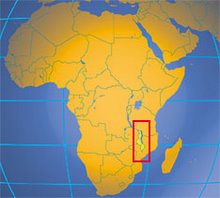
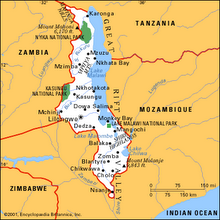
Earlier this week I went down to Machinga for several days to take part in a Water User’s Day in a village called Chilimani within one of the gravity-fed schemes. Geographically, Machinga is located very close to Zomba in the southern part of Malawi (check out the map of Malawi on the side and if your eyes are good, you should be able to pick out Zomba!). With members of the local implementing NGO, as well as extension agents from various district level ministries, we were up bright and early (we were at the tap at 5AM!) to collect data on the household water users at the tap and through various household surveys, to determine how much water is being used, what are their water handling and sanitation practices, what are the hygiene practices, and trying to assess if any groups are being excluded at all from access to the water point for economic or social reasons. We also collected several water samples for water quality testing and conducted a meeting with the tap committee to understand some of their concerns including the collection of user fees and areas for system extensions. It was great to be in the village again! It reminds me a lot of Uganda in many ways. It was also good to become a little more familiar with the project and to meet some of the people and start to identify ways in which I think I’ll be able to contribute. Below are a few pictures from my two days in Chilimani.
I hope all is well with everyone back home. Keep the emails coming as I can’t get enough of them!
Hugs, Heather
Engineers Without Borders (EWB) has partnered with WaterAid in several other countries including Zambia and Burkina Faso. There are currently two volunteers with WaterAid Zambia and it is great to have them so close by so we can compare notes and help each other out. My role with WaterAid Malawi is as a Technical Support Officer. In that capacity, I will be undertaking several tasks and assisting with several of their projects. The first is a project to be undertaken in Machinga District that includes the rehabilitation of two gravity-fed water schemes. Malawi has over 80 gravity fed schemes in the country but many of them have fallen into disrepair. This particular project includes working with their local partner organization, responsible for the project implementation, and the local government, responsible for project planning and monitoring, to rehabilitate the two schemes, and where required, provide some technical support, assist in the development of a water quality monitoring program and the training of the community management committees. Other projects include further water quality monitoring in Salima District as well as conducting some research on the feasibility of rope pumps that have been used as an alternative technology to handpumps. They represent a lower cost alternative to the handpumps but further investigation is required to ensure they are maintained by the community and are providing water of adequate quality.
Over the past week and a half I have been lucky to get out in the field a few times. Last week I visited some peri-urban areas on the outskirts of Lilongwe. WaterAid is working with the Lilongwe Water Board to set up water kiosks, communal areas where people can go to purchase treated water, in low income urban settlements. It was quite an experience in many ways. It was difficult to see the conditions in which many of these people are living. Many of them get their water from open shallow dug wells. I looked down one of them and it was awful...garbage floating in it, a scum on the top and very murky. There's also several pools of standing water around where people dump their used water because there's no sanitary system. These areas attract mosquitoes and, therefore, malaria. In many cases, there is a tap quite nearby but many have been disconnected as the money that was being collected was not being remitted to the Water Board. The Water Board, with assistance from WaterAid, is working to liase with the community groups to ensure that adequate water is being provided and the kiosks are being properly managed such that the Board is being fairly compensated for the service it provides.
Earlier this week I went down to Machinga for several days to take part in a Water User’s Day in a village called Chilimani within one of the gravity-fed schemes. Geographically, Machinga is located very close to Zomba in the southern part of Malawi (check out the map of Malawi on the side and if your eyes are good, you should be able to pick out Zomba!). With members of the local implementing NGO, as well as extension agents from various district level ministries, we were up bright and early (we were at the tap at 5AM!) to collect data on the household water users at the tap and through various household surveys, to determine how much water is being used, what are their water handling and sanitation practices, what are the hygiene practices, and trying to assess if any groups are being excluded at all from access to the water point for economic or social reasons. We also collected several water samples for water quality testing and conducted a meeting with the tap committee to understand some of their concerns including the collection of user fees and areas for system extensions. It was great to be in the village again! It reminds me a lot of Uganda in many ways. It was also good to become a little more familiar with the project and to meet some of the people and start to identify ways in which I think I’ll be able to contribute. Below are a few pictures from my two days in Chilimani.
I hope all is well with everyone back home. Keep the emails coming as I can’t get enough of them!
Hugs, Heather
Tuesday, August 14, 2007
Biker Babe!
So I’m officially a biker babe! Motorcycle lessons were awesome! We started off practicing in the back garden of the NGO where we were learning. There were 2 bikes and 4 of us so we had to take turns. We were puttering around the nice manicured gardens so slowly that it was like a pony ride at the fair! Hilarious! In the afternoon we ventured out and our instructor took us to a soccer field where we had a good audience of children who were amazed as we drove up with bikes on the back of the pickup and then proceeded to do circles around the field dodging kids, soccer balls and pylons. It was getting a bit precarious so after a few rounds we decided to call it quits for the day. The next day we went out again to another field and I can say that after all that practice I’m feeling pretty good on the old “hog” but we’ll see how I do out on the real roads once I get my license!

Around and around the garden...

Our audience...

This morning I had my first meeting at work and it went pretty well so I'm excited! There about 10 people in the office and they are all very friendly. It sounds like I'll be in Lilongwe for about 2 weeks getting familiar with the people and the programs of the head office and then I'll be headed to Machinga which is in the south (close to one of the to game parks!) to work with one of their partner organizations for a few months and get familiar with some of the field realities. They have a couple gravity-fed systems as well as some sanitation and hygiene programs underway that I will hopefully be able to help out with.
So tomorrow will be my first official day of work at 7:30AM and I have about an hour walk so I'll be up early! I'm looking forward to getting started and learning more about what they do.
Hope everyone is well back home! Hugs!
Thursday, August 9, 2007
We Made it...
Hey gang,
We made it to Lusaka! It was a whirlwind trip but pretty uneventful so that was good. We've been here almost a week now and have been doing some more training and just getting more comfortable venturing out into the market and exploring some of the smaller towns around. We had one activity that was a bit of a scavenger hunt where we had to find a specific town and ask around to find several things, learn to dance and find out about Zambian pop culture. We tried to find the town twice unsuccessfully and finally decided we'd just do our scavenger hunt in the town we did find ourselves in. Nothing like making a scene as we convinced the market women to teach us to dance and then rounded out the adventure with a trip to the witchdoctor where we opted not to go through the "consultation"... just in case. It's been fun to explore around and I'm excited about how natural and comfortable I feel.
The next few days we have motorcycle training which I'm super psyched about! I'll try to get some photos and put them up on here when I get a chance. Then we are headed to Lilongwe on Sunday morning which is a 12-18 hour hike but I'm really looking forward to finally getting to Malawi and getting started on work. It's nerve-wrecking as well but I just want at it now.
Hope all is well. I send you big hugs!
Love, Heather
We made it to Lusaka! It was a whirlwind trip but pretty uneventful so that was good. We've been here almost a week now and have been doing some more training and just getting more comfortable venturing out into the market and exploring some of the smaller towns around. We had one activity that was a bit of a scavenger hunt where we had to find a specific town and ask around to find several things, learn to dance and find out about Zambian pop culture. We tried to find the town twice unsuccessfully and finally decided we'd just do our scavenger hunt in the town we did find ourselves in. Nothing like making a scene as we convinced the market women to teach us to dance and then rounded out the adventure with a trip to the witchdoctor where we opted not to go through the "consultation"... just in case. It's been fun to explore around and I'm excited about how natural and comfortable I feel.
The next few days we have motorcycle training which I'm super psyched about! I'll try to get some photos and put them up on here when I get a chance. Then we are headed to Lilongwe on Sunday morning which is a 12-18 hour hike but I'm really looking forward to finally getting to Malawi and getting started on work. It's nerve-wrecking as well but I just want at it now.
Hope all is well. I send you big hugs!
Love, Heather
Subscribe to:
Posts (Atom)